THE MAGIC HOUR/s
As a midwife and mother I have witness and experienced the almost magical and mystical power of skin to skin contact in the first hour of birth. There is substantial evidence to suggest that the impact of this imprinting time is vital for bonding between mother/infant, establishing breastfeeding and the establishment of life in the extra uterine environment. A number of things instinctively happen when a mother is left undisturbed with her infant in the first hour after birth. Sometimes the amount of oxytocin in the room following a birth is almost palpable.
When a mother and baby are left undisturbed to connect and commence breastfeeding infants are more likely to successfully breastfeed then those who are separated at birth. The ability for baby to achieve an optimal latch and minimise painful latching is also intensified when babies go through this stage within an hour of birth.
The breast crawl is something that I am always amazed to see. Infants usually exhibit the following stages following birth …
Rest and relax
This is where the baby who has just been through the birthing journey will often just rest and be peaceful. Some babies will even go to sleep during this time.
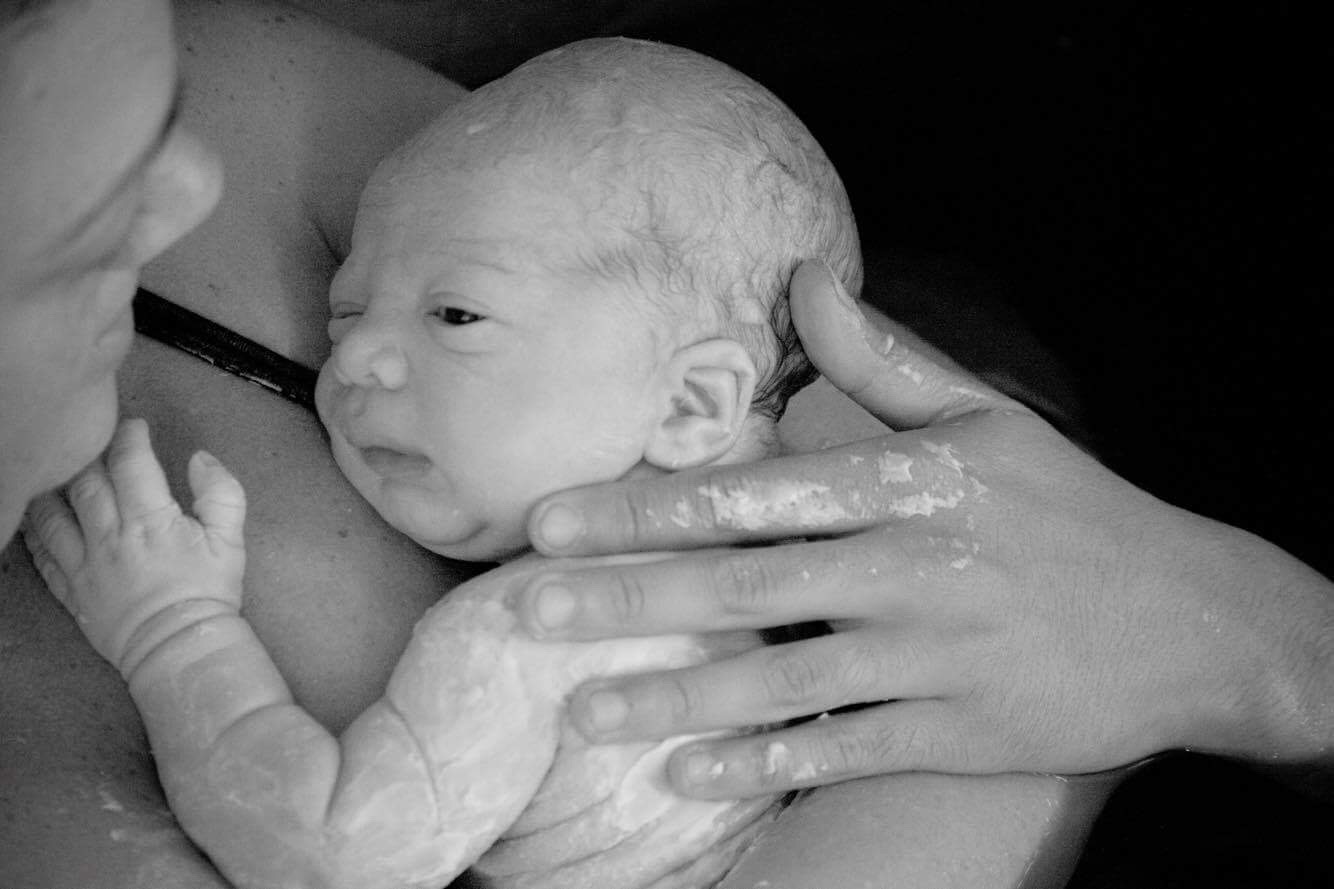
Awakening the senses
During this time the baby will appear alert and may suck his/her fists and lips the baby may start salivating and then will start making their way down to the breast
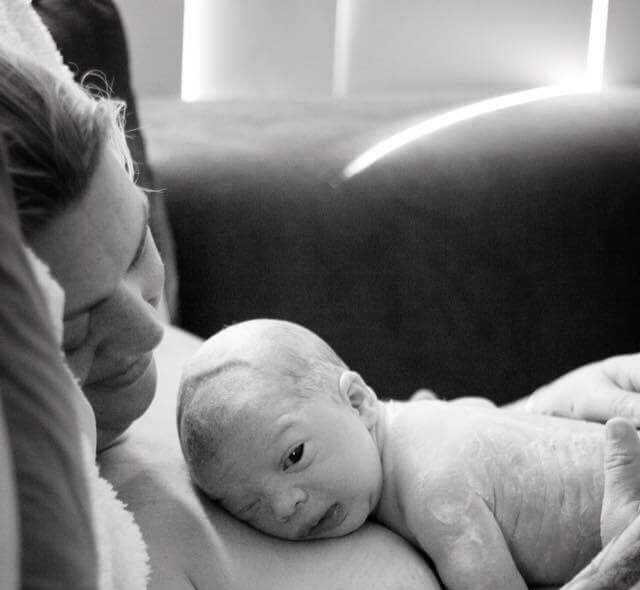
Crawling to the source
Babies will use all sorts of mechanisms to get to the breast unassisted. Some babies will bob their heads, others will do a little cheek walk and others will throw themselves down towards the breast.

The first latch
Once the baby is in the vicinity of the nipple – most babies will start to attempt to latch. They will often grab at the breast with their hands/lick or nuzzle the areola and eventually will latch on with very little assistance from mum.

The importance of this magic hour
- Allows the infant to regulate their body temperature, heart rate, breathing and stabilise blood sugar levels
- Encourages hormone boost in mother to help stop bleeding and start the lactation process
- Assists the mothering/bonding hormone between mother and infant (certain hormones are released during this time to assist with bonding)
- Encourages first latch, imprinting latching technique that can assist with establishing breastfeeding
- Allows baby to receive all of their cord blood
When families are pregnant there is often significant emphasis on the labour/birth process and not a lot of thought goes into what happens in the moment and days following the birth. It is really important to be aware and understand the physiological normal principles that can follow the birth of your baby and ensure that they have the best opportunity to follow these principles. Immediate skin to skin and allowing baby to do the breast crawl can also be facilitated in most births – both planned/unplanned cesarean births, instrumental births and even premature births.
Speak with your care provider and have uninterupted skin to skin and allowing baby to do the breast crawl added to your list of birth preferences. Even after the first hour – keeping baby skin to skin for the following days is also a great way to establish breastfeeding.
Tamika x
_____________________________________________________________________________
DO YOU KNOW WHAT AN AVERAGE WEIGHT GAIN IS FOR YOUR BREASTFED BABY?
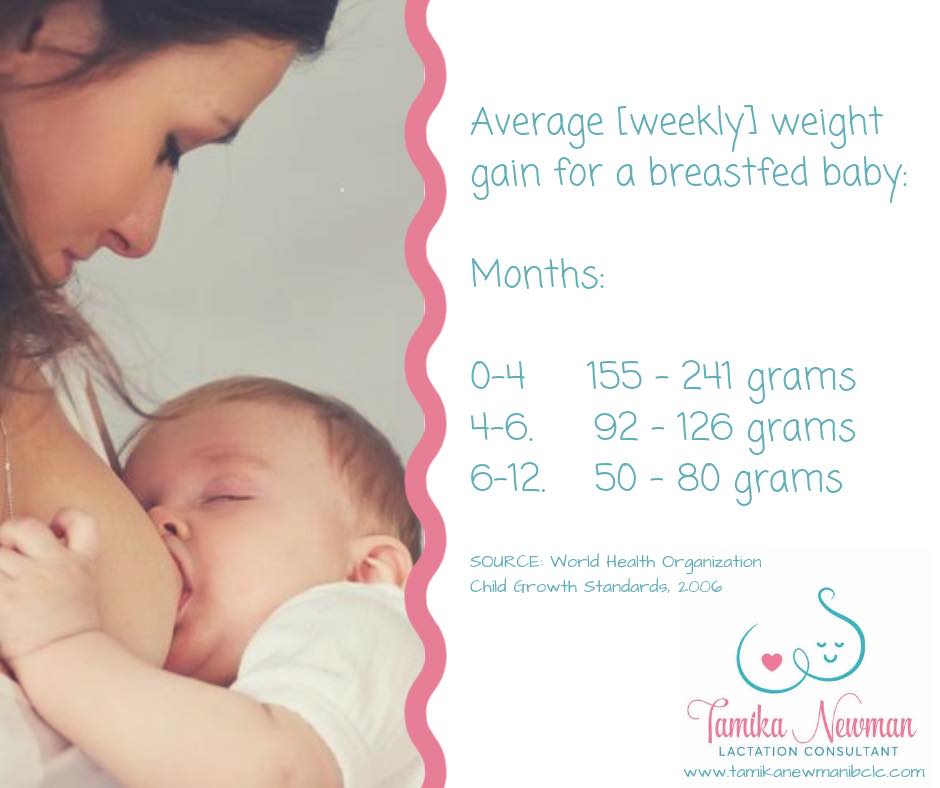
Quite often many new mum’s are met with misinformation when it comes to normal growth and development. With the misinformation comes advice that often suggests the mums body is failing her and to either take medication to boost milk production or to give baby formula.
Normal growth for a breastfed baby includes a baby who gain quite rapidly in the first 4 months followed by a slowing down of weight gain as the baby starts to become more active.
It is important to remember that the assessment of wellbeing is not based on just weight gains though. Along side weight gains, health professionals should be looking at:
- Nappy output
- Digestion patterns
- Gross motor skills
- Skin tone/fat coverage
- Baby’s demeanour
IF there is a concern about a baby’s weight pattern then first line management should include a comprehensive oral exam exam and an observation of a complete breastfeed.
Then an investigation into:
- Gut health (ie: has baby had antibiotic exposure)
- Food intolerances
- Sleeping patterns
- Gross motor milestones
- General overall behaviour
- Feeding history (ie: has baby been fussing or biting at the breast, has mum had nipple damage or recurring mastitis).
Only once a baby has had a thorough assessment can a recommendation be made. The answer to increasing weight gain does not have to be the introduction of artificial baby milk. When we can find the route cause of the reason why a baby is not gaining weight appropriately, then a solution can be found.
There are a number of techniques that can be used to both increase a mother’s milk production and also ensure that the baby is receiving enough milk. Some of these techniques include:
- Improving latching technique
- Breast compressions
- Super switching
- Pumping or power pumping
- Using a supply line at the breast with EBM or donor milk
- Finger feeding/cup feeding to improve latching and removing the risk of bottle preference.
If you are having concerns regarding your baby’s growth I would encourage you to have a thorough assessment with an IBCLC.
_____________________________________________________________________________
DANGERS OF EARLY INTRODUCTION OF SOLIDS
I have see this article around Facebook recently. I also hear lot of talk about parents introducing solids to their 8/9/10 week old babies.
The fact that I hear of many parents introducing solids too early really concerns me so I wanted to share some information.
Whilst there is still debate in regards to the timing of introduction of solid foods (4-6 months vs 6 months), there is unilateral agreement from health authorities worldwide that babies should NOT be introduced to any form of solid food before the fourth month of a babies life.
Countless studies have shown that introducing supplementary foods before at least the fourth month of life poses significant risk and health problems to infants as before this age, – the digestive system, immune system, kidneys and ability to chew and swallow are not yet fully developed or ready for solids.
Early introduction of foods has been proven to increase the risk of asthma, allergies, coeliac disease, digestion problems, gastroenteritis, respiratory tract infections, ear infections, obesity, diabetes and SIDS death.
For over 20 years now many health experts (The World Health Organization, Unicef, American Academy of Paediatrics, American Academy of Family Physicians, Australian National and Medical Research Council, Health Canada, SIDS and Kids association, Le Leche League and Australian Breastfeeding Association) agree that it is best to leave the introduction of solid foods until at least 6 months.
The current recommendations from all advisory bodies mentioned include: babies should be exclusively breastfed (no cereal, juice or any other foods) for the first 6 months of life.
Not only does introducing solid foods prior to the recommended time frame increase health risks for the infant but also impacts the breastfeeding relationship and the mothers ability to maintain her milk production.
By replacing breastfeed with solid foods and enforcing artificial spacing of feeds (especially in the first three months when milk production regulation is establishing) the mothers milk production may decrease.
You can read more on my thoughts on when and how solids should be introduced here.
_____________________________________________________________________________
SOLIDS THE SIMPLE ANSWER
Ah the conundrum of solid foods and ‘when’ to introduce them. Lately I have been asked the question of “has Imogen started solids” or “when are you starting her on solids”. This is something that is in the forefront of parents minds and usually up for a lot of debate.
There is a lot of different advice out there from starting at 4 months …. To starting at 6 months and everything in between. I once read a really scary statistic from a study done by the CDC which showed over 40% of the babies studied had started solids before four months and 9% before four weeks!
Science is starting to uncover and understand the impact on the role of gut flora/gut health and how it effects well pretty much everything. With the ever increasing amounts of childhood illnesses such as asthma, allergies, autism, diabetes, obesity etc that is seen today the thought of parents introducing solids well before any recommendations and the impact that could have is incredibly scary.
I’m sure most people have heard of the ‘virgin gut theory’. You can read a great explanation here. Whilst I agree with the concept of the gut needing to be ready and developed enough to accept solid foods – giving a ‘blanket’ rule still doesn’t sit right with me.
Even with a blanket rule of six months … What is even considered six months? Is it six calendar months? Is it 24 weeks? Do you take gestation into account (ie. if baby was born at 38 weeks do you allow an extra two weeks or if a baby born at 42 weeks do you subtract two weeks)?
And what about the “signs” of being ready for solids??? Some of the regular ones you will hear are along the lines of:
– reaching double birth weight
– the arrival of teeth
– being ‘interested’ in food
– being able to sit independently
– waking through the night
– appearing hungry
– making chewing motions
Confused yet??

Imogen is rapidly approaching the six calendar months and was 24 weeks today and ticks all those boxes but is she ready for solids? Despite watching me intently as I eat from eight weeks, doubling her hefty birth weight and sitting independently from four months and having teeth from five months the answer is …. No!
How do I know this and what have I learnt from years of study into the subject for the breastfed infant? (Please note these thoughts are only for the breastfed infant as formula fed babies do in fact need to source extra nutrition from food sources around the four month mark as formula unlike breastmilk doesn’t change to the needs of the infant).
Starting solid foods is just like any other physical milestone. With a basic knowledge of human biology we know that every child is an individual and will be developmentally ready for milestones at different times so why do we have one for introducing solids?
Imagine if we approached other milestones like we do solids … Oh little Jimmy is 4 months and 15 days today so we must start him sitting. Pretty illogical right?
To give a “start date” or blanket rule just seems preposterous to me …. Yes even the six month rule. Just like ‘most’ babies walk at or very close to 12 months some walk at 10 months and others not until 14 months which are all within normal parameters for that particular milestone. Most babies will be ready for solid foods around six months but some babies will be ready earlier/later then others and we should let them guide the way rather then forcing them to eat solid food before they are ready.
So I know Imogen is ready for solid food when she can pick up a piece of food, bring that piece of food to her mouth and bite, chew and swallow …. Simple as that.
The theory behind this being that her body wouldn’t allow her to be physically ready to consume food before her gut is ready to receive food.
I’m not sure when that will be for her and I’m sure it’s not too far around the corner but it just makes sense that the gut will be developmentally ready when she is physically ready to do those steps and NOT before.
She is definitely in practice mode at the moment and is starting to steal food from myself or her sister and puts it to her mouth but doesn’t have the bite, chew or swallow motion going on. I haven’t stopped her if she does grab something off my plate, yet by watching what she does with said food is a great indication that her body is not ready for solids.
(Imogen looking very proud of herself as she stole the apple out of Daddy’s hand)
This school of thought totally negates the need for any pureeing or mashing of food and in fact if I was to feed her puréed food which I’m sure she would love … I would in fact be introducing food before her body is truly ready and possibly cause her life long issues.
When she is physically capable to consume solid foods I will simply be providing a variety of substantial whole family foods such as avocado, broccoli, carrots, slightly steamed apples, cooked meats, eggs etc cut in large (bigger the then her hand) pieces so she can negate them easily. Basically anything we are eating she will eat within reason (she won’t be having any of mummy’s chocolate!). You can read more on what foods to introduce, how to prepare them and more on baby led weaning here.
So the simple answer to when is a baby ready for solids is ….. Probably somewhere around the six month mark and when your baby can grab, bite, chew and swallow.
Tamika Newman
RN, RM, IBCLC
 Midwife Tamika